Ruaha National Park Safari: Discover the Wild Heart of Tanzania
What does a truly wild Tanzania safari feel like?
Imagine driving through endless golden plains with ancient baobab trees rising above the landscape. In the distance, a herd of elephants moves slowly toward the Great Ruaha River. Somewhere nearby, lions are resting beneath the shade, while birds fill the air with their calls.
This is Ruaha National Park.
Located in south-central Tanzania, Ruaha is one of the country’s great wilderness destinations. Covering approximately 20,226 square kilometres, it is Tanzania’s second-largest national park according to Tanzania National Parks.
But Ruaha’s beauty is not simply about its size.
It is the combination of wildlife, landscapes, rivers, ancient baobabs, predators and a powerful sense of wilderness that makes a Ruaha safari so special.
Why Is Ruaha National Park Special?
Ruaha offers a different kind of safari experience.
It is a destination where the landscape itself becomes part of the adventure.
You are not simply searching for animals. You are travelling through a living ecosystem of savannah, miombo woodland, rocky outcrops, river systems and enormous baobabs.
The Great Ruaha River is one of the park’s defining features and an important source of water for wildlife, especially as the dry season progresses.
For travelers who want to experience Tanzania away from the busiest safari routes, Ruaha can be an exceptional choice.
The Great Ruaha River
One of the most beautiful features of the park is the Great Ruaha River.
The river creates a natural lifeline through the wilderness.
During the dry season, water becomes increasingly important, and wildlife gathers around remaining pools and water sources.
This can create extraordinary wildlife encounters.
You may watch elephants approaching the water, see hippos and crocodiles in suitable areas, or observe birds along the riverbanks.
The river also creates beautiful photographic opportunities, particularly in the early morning and late afternoon.
Ruaha’s Giant Baobab Trees
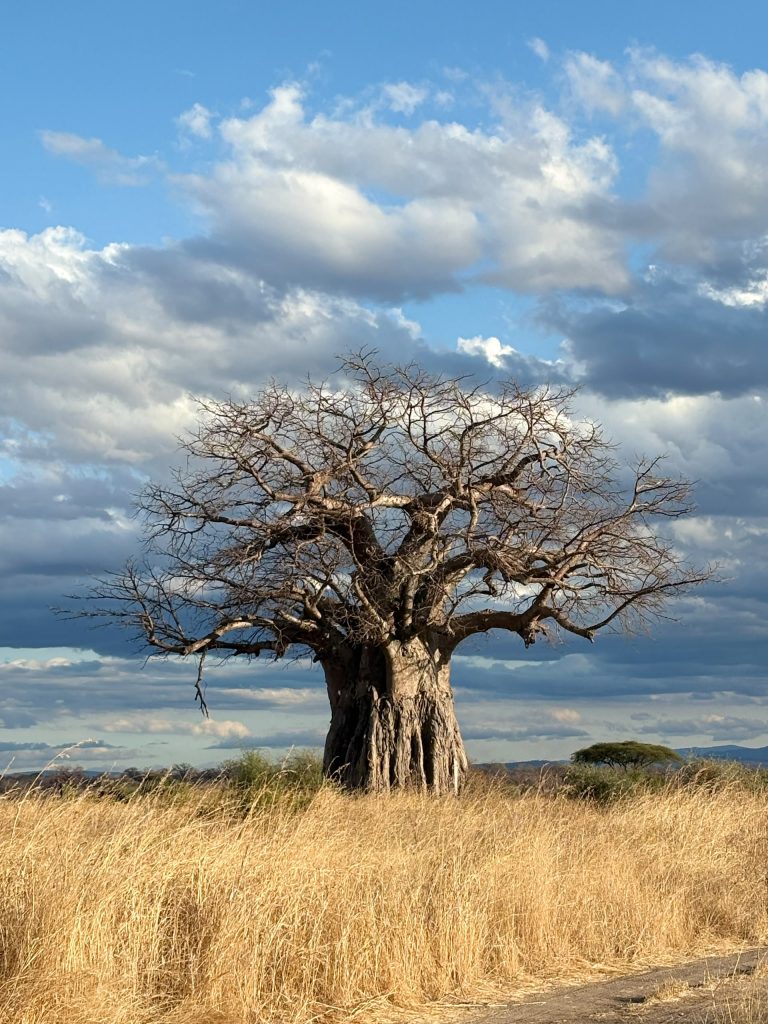
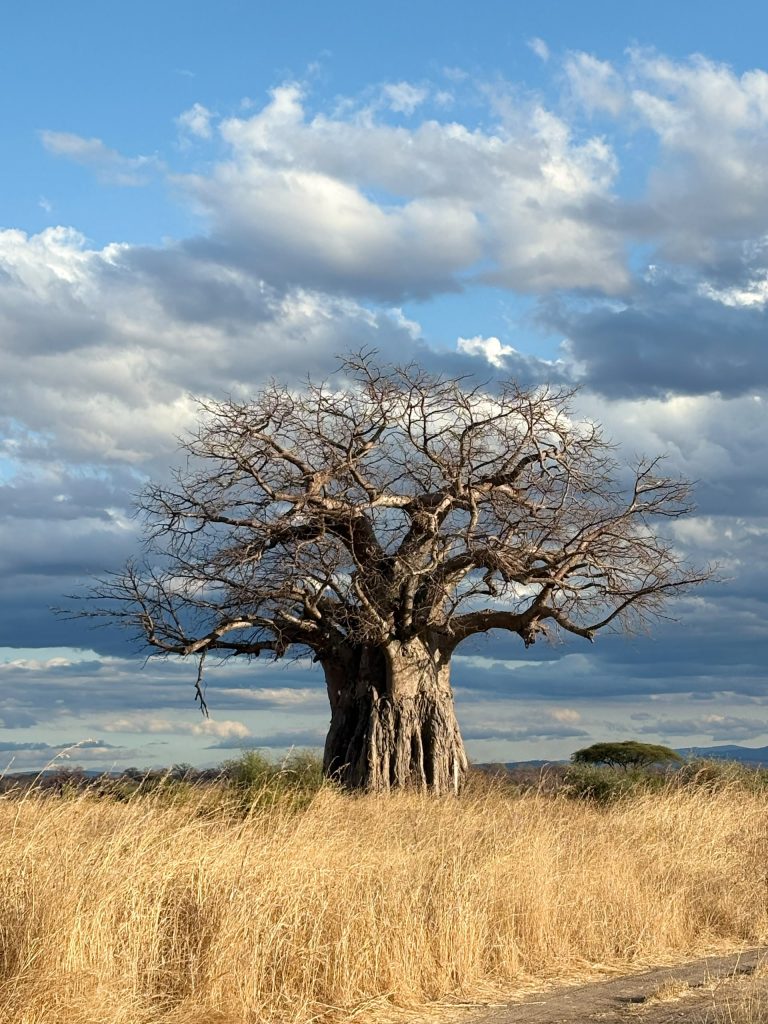
If there is one image that immediately captures the character of Ruaha, it is the baobab tree standing against the African savannah.
Ancient baobabs are scattered across the park, creating dramatic silhouettes against the sky.
During sunrise and sunset, the golden light transforms these trees into unforgettable photographic subjects.
For photographers, Ruaha offers the rare combination of wildlife and landscape in the same frame.
An elephant beneath a giant baobab is not just a wildlife sighting.
It is a picture of Africa.
A Wonderful Place to See Elephants
Ruaha is particularly well known for its elephants.
During the dry season, elephants can gather around rivers and other remaining water sources, creating spectacular scenes.
Watching a herd move through the golden grass is one of the experiences that can define a Ruaha safari.
You may see adults travelling with young calves, elephants feeding beneath trees, or large groups moving toward water.
These moments are unpredictable—which is part of what makes a safari exciting.
A Land of Lions and Predators
Ruaha is also important for travelers who love big cats and African predators.
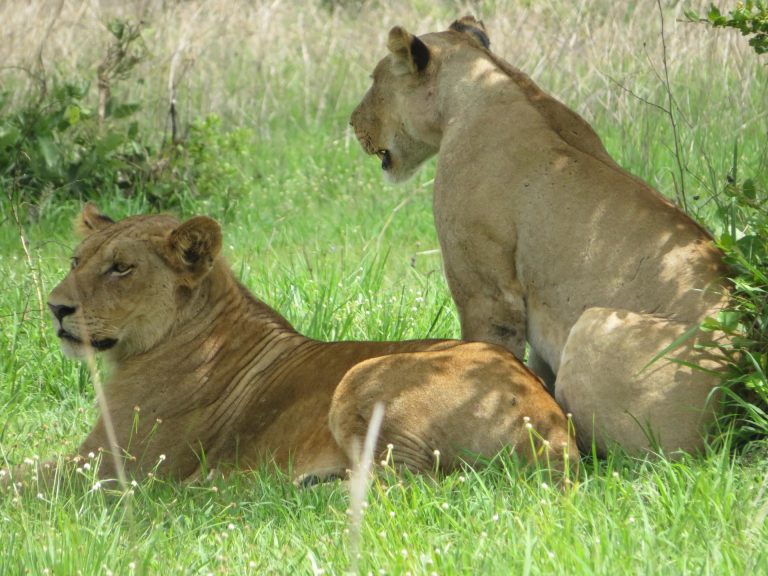
The park supports large lion prides as well as leopard, cheetah and spotted hyena populations. African wild dogs can also be encountered, particularly in remote areas.
A quiet morning game drive may begin with nothing more than tracks in the sand.
Then your guide notices movement.
A lion appears.
Or a leopard disappears into the woodland.
Or a pack of African wild dogs crosses the road.
That element of uncertainty is part of the magic of Ruaha.
Discover Ruaha’s Special Antelopes
Ruaha is not only about elephants and big cats.
The park is also known for interesting antelope species, including greater kudu, sable and roan antelope.
This makes Ruaha particularly rewarding for travelers who want to look beyond the most famous safari animals.
The park’s ecological position, where eastern and southern African influences overlap, contributes to its remarkable diversity.
A Paradise for Birdwatchers
You do not need to be a serious birdwatcher to appreciate Ruaha’s birdlife.
TANAPA records more than 570 bird species in the park.
Colorful bee-eaters, kingfishers, rollers, hornbills and birds of prey add movement and sound to the landscape.
For photographers, birds provide another reason to keep the camera ready between major wildlife sightings.
What Does a Game Drive in Ruaha Feel Like?
A Ruaha game drive is not simply a race to find the Big Five.
It is about exploring.
You might follow a river line.
You might stop beside a baobab.
You might discover fresh animal tracks.
You might spend several minutes watching elephants without moving on.
And sometimes, you may drive for a while without seeing a large animal at all.
Then suddenly, the wilderness comes alive.
That unpredictability is part of the safari experience.
Is Ruaha Good for Wildlife Photography?
Absolutely.
Ruaha combines three things that photographers value:
Wildlife.
Landscape.
Light.
Imagine:
– An elephant walking beneath a baobab.
– A lion against golden grass.
– A giraffe crossing an open plain.
– Birds beside the Great Ruaha River.
– A predator appearing at sunrise.
– A sunset over the African wilderness.
These are the moments that can turn a safari into a photographic story.
Is Ruaha Suitable for a Honeymoon?
Yes.
For couples who want a quieter safari atmosphere, Ruaha offers an opportunity to combine wildlife, beautiful landscapes and peaceful wilderness.
A honeymoon itinerary can include comfortable accommodation, private safari experiences where available, sunset experiences and time to simply enjoy the surroundings.
Ruaha can also be combined with Zanzibar if you want to finish your safari with several days on the beach.
Is Ruaha Good for Families?
A Ruaha safari can also be designed for families.
The itinerary should take into account the children’s ages, travel time, accommodation and activities.
With the right planning, children can experience elephants, lions, giraffes, birds and many other species while learning about Tanzania’s natural environment.
When Is the Best Time to Visit Ruaha?
Ruaha can be visited throughout the year, but different seasons offer different experiences.
The dry season, generally June to October, is popular for wildlife viewing because water becomes more concentrated and animals can gather around reliable water sources.
The green season brings fresh vegetation and beautiful landscapes and can be rewarding for birdwatching and photography.
So rather than asking only, “What is the best month?”, it is better to ask:
What kind of Ruaha experience do you want?
How Many Days Do You Need in Ruaha?
For travelers with limited time, a short Ruaha safari can still be rewarding.
However, spending several nights gives you more opportunities to explore different areas of the park and enjoy the experience without rushing.
A longer Southern Circuit itinerary can combine:
Ruaha + Nyerere
for wildlife and river-based experiences.
Or:
Ruaha + Udzungwa
for wildlife, mountains, forests and hiking.
Or:
Mikumi + Ruaha
for a broader Southern Tanzania safari.
The Southern Circuit offers a diverse combination of national parks and nature experiences.
Is Ruaha an Alternative to Serengeti?
For some travelers, yes.
Serengeti is famous for its open plains and the Great Wildebeest Migration.
Ruaha offers something different: vast wilderness, baobab landscapes, elephants, predators, special antelopes and a quieter Southern Circuit experience.
If your dream is specifically to witness the Great Migration, Serengeti should remain on your itinerary research.
But if your priority is wilderness, tranquility, wildlife diversity and a less conventional Tanzania safari, Ruaha deserves serious consideration.
You can also experience both if your time and budget allow.
Why Choose Ruaha for Your Next Tanzania Safari?
Ruaha brings together an extraordinary combination of:
– Vast wilderness
– Large elephant herds
– Lions and other predators
– African wild dogs
– Greater kudu, sable and roan
– Ancient baobab trees
– The Great Ruaha River
– More than 570 recorded bird species
– Dramatic landscapes
– Excellent photography opportunities
– Walking experiences in designated areas with authorized guides
But statistics alone cannot explain Ruaha.
You have to experience it.
The Ruaha Experience Is About More Than Animals
Years after your safari, you may not remember every animal you saw.
But you may remember the morning when the sun rose over the baobabs.
You may remember the silence when your guide switched off the engine.
You may remember elephants walking toward the river.
You may remember a lion appearing through the golden grass.
You may remember the sunset.
That is the beauty of Ruaha.
It is not simply a place to see Africa.
It is a place to experience Africa.
Plan Your Ruaha National Park Safari with Clustered Africa Safaris
At Clustered Africa Safaris, we help travelers discover Tanzania through personalized safari experiences.
Whether you are planning a 3-day Ruaha safari, a honeymoon, a family adventure, a wildlife photography trip, or a longer Southern Circuit safari, we can help you build an itinerary around your travel dates, interests and budget.
If you are looking for a safari away from the ordinary routes, Ruaha may be the Tanzania experience you have been searching for.
Ready to discover the wild heart of Tanzania?
Contact Clustered Africa Safaris and start planning your Ruaha National Park safari today.